
Mute Wall
The gods are dead. The throne still lives.
An epic-fantasy saga of dynastic intrigue, dark myth, and an erasure-of-existence apocalypse. In ancient times the gods sealed the world's silent north, leaving behind throne, crown, royal blood, and the Mutewall. After the gods died, the true function of kingship was to hold the seal. As the Mutewall falls silent, the kings' names flake from the world one by one.
Latest Chapters
View all →- Chapter 012PublishedThe Dusk Guard2769 words
- Chapter 011PublishedThe Hidden Door in the Tomb Gallery2085 words
- Chapter 010PublishedMing Ravenfeather1411 words
- Chapter 009PublishedLian's Refusal1575 words
- Chapter 008PublishedThe Thing in the File Box1433 words
- Chapter 007PublishedSoren's Bowstring1168 words
Key Characters
Those not yet erased by the world before the Mute Wall fell
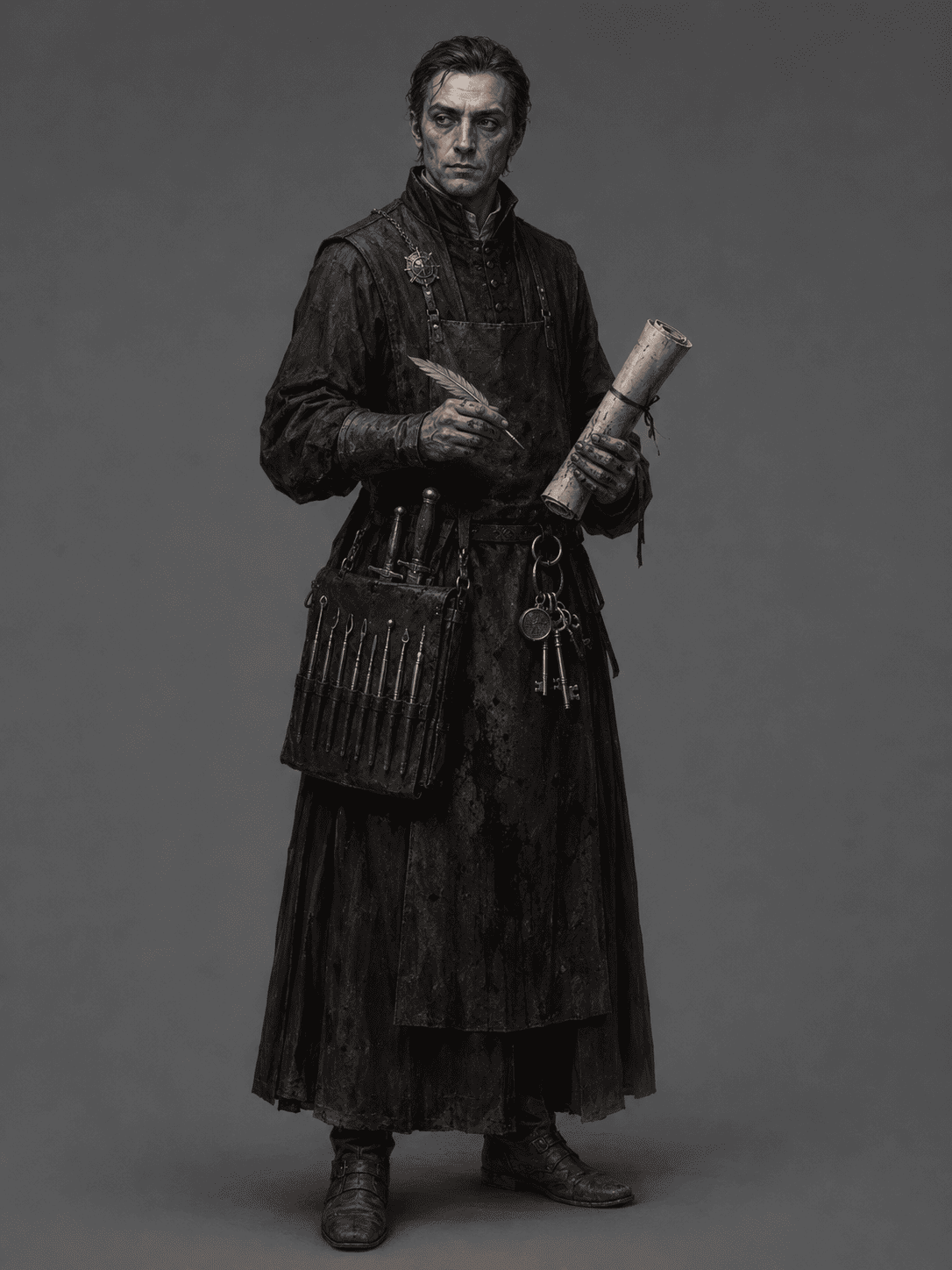 王座驗屍官
王座驗屍官Throne coroner of the Iron Capital dynasty, in his 17th year holding the seal. He believes not in fate, only in corpses and records—until he reads, on the old king's body, a word that should not exist.
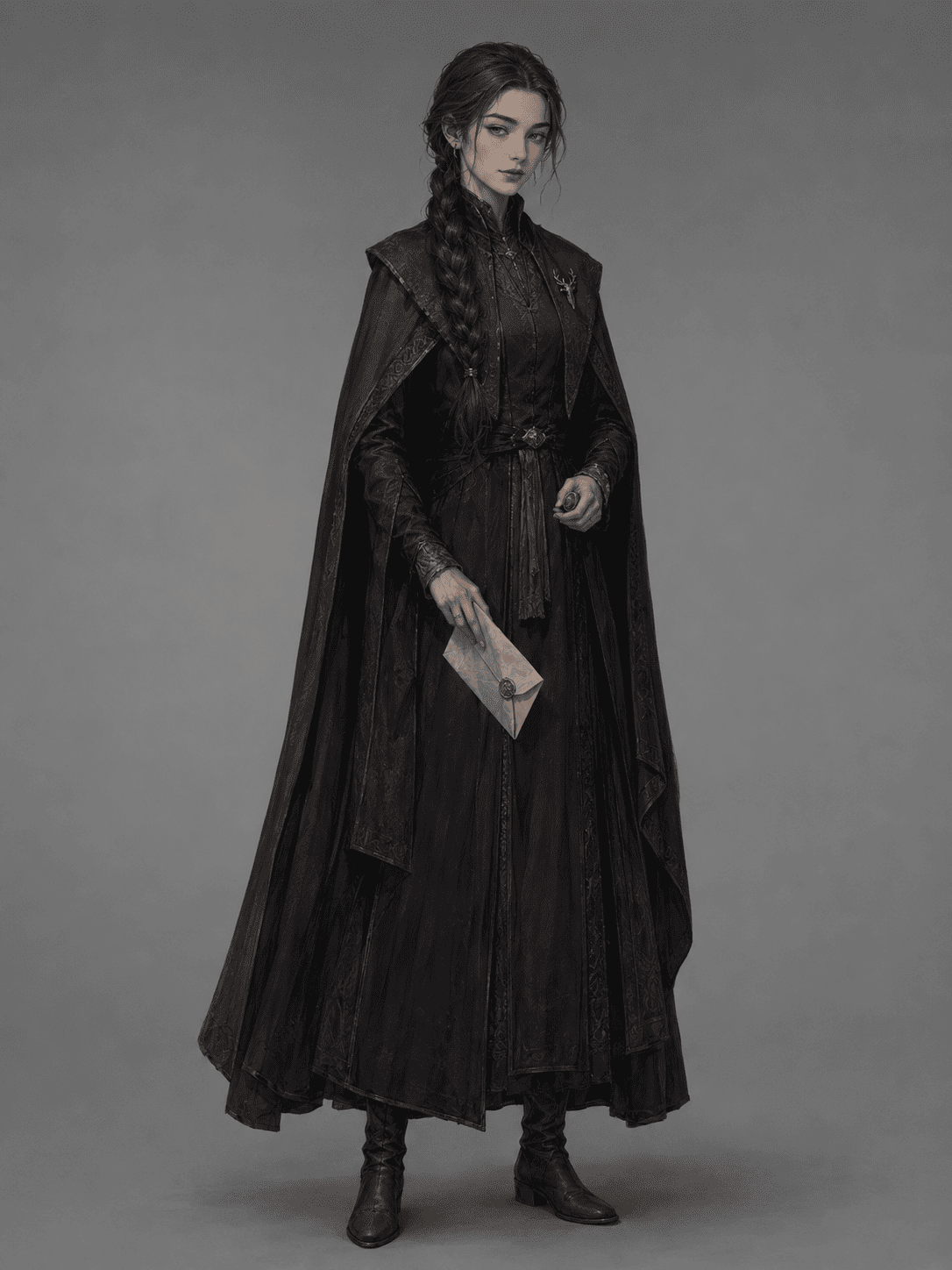 鐵鹿王族
鐵鹿王族The old king's seventh daughter, a princess left off the line of succession. Everyone treats her as an outsider—except those who trade with her in the shadows.
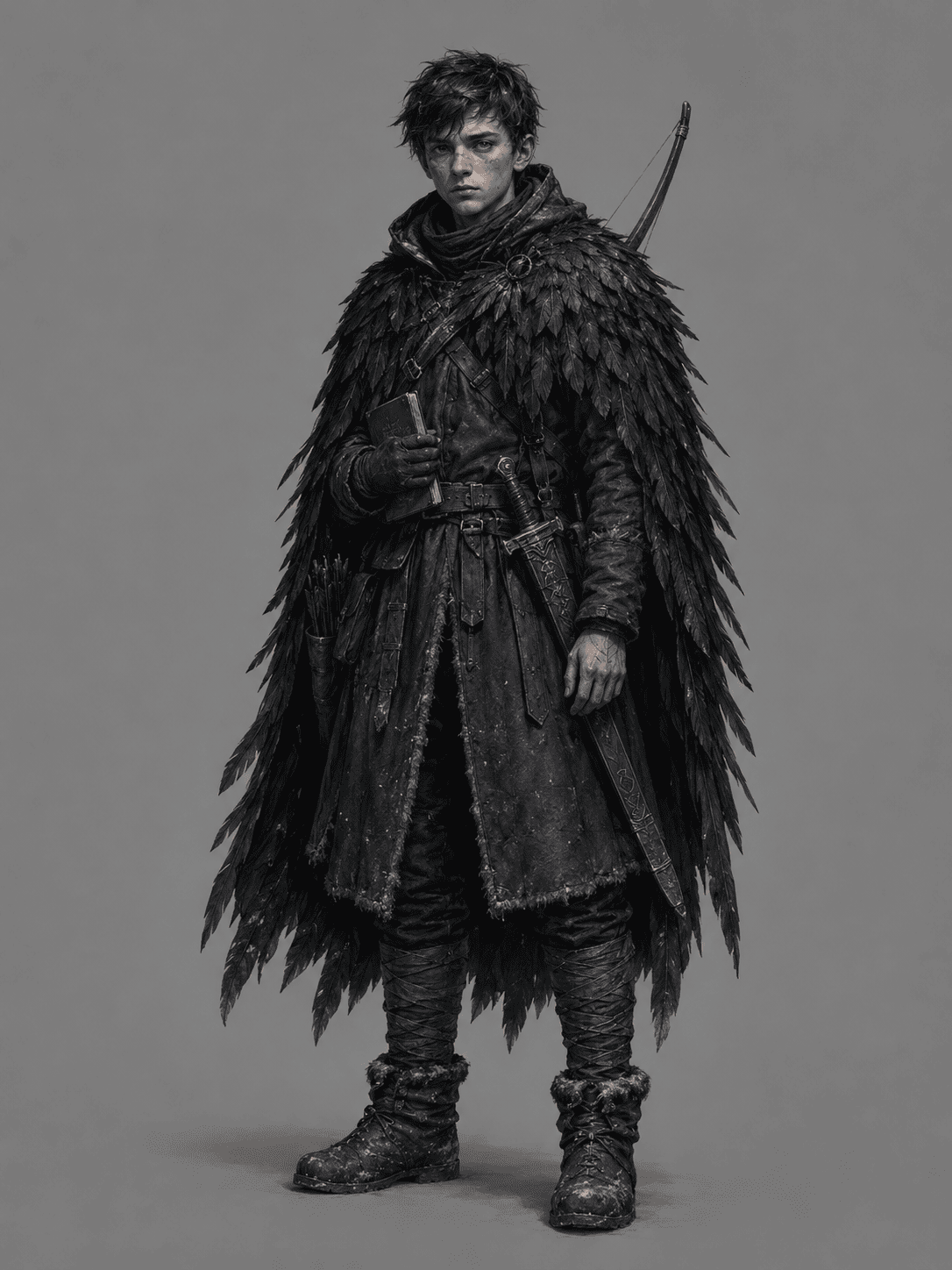 默境守牆軍
默境守牆軍A sixteen-year-old recruit of House Crowfeather's wall garrison. On his first night atop the wall, he finds he can read the ancient script no one else can decipher.
About This Work
Mute Wall: No Gods in the North is a long-form serialized epic fantasy weaving dynastic intrigue, dark mythology, and an existential-deletion apocalypse. In an age of myth, the gods used seven kingdoms to seal away the "Silent North," leaving behind four legacies: the Throne, the Crown, the Royal Blood, and the Mute Wall.
Millennia after the gods perished, humanity misread the entire sealing apparatus as a divine mandate for kingship. So the seven great houses have spent centuries assassinating, intermarrying, and usurping one another — and every usurpation strips another true name from the Mute Wall, letting the Hollowborn, the First-Era human civilization the gods once erased, walk back a step further out of the north. The coldest thing about this work is that the world is not being ended by a dark lord. It is being ended by a set of ordinary nobles who only want to sit in that chair.
The protagonist, Ion Greypen, holds the office of Royal Throne Coroner. His job is to write down the cause of death for those who die near the crown — the angle of the blade, the residue of the poison, whether anyone moved the body before burial. The work puts him in a peculiar position: he never sees the surface of power, but he sees exactly what power leaves on a body when it comes down. Truth, for him, is not something deduced. It is scraped out, one stroke at a time, from corpses, tomb epitaphs, and bloodline records that have been altered.
The three people who travel with him each embody a different stance toward the Throne. Seventh Princess Selene sits at the far end of the succession, and therefore understands better than anyone how the institution consumes people. Northern-border bastard Kael has no surname to inherit and only a life to stake. White Tower Pontiff Aurus guards the Church's official account of what happened after the gods died, and simultaneously guards the hollow underneath that account. Their goals do not align, and the cooperation is conditional from first page to last.
The work unfolds across three volumes: No Gods in the North / The Mute Wall Silences / The Gods Are Dead. The first stays in the capital with murder and succession maneuvering, the camera pressed close between people. In the second, as true names continue to flake away, the anomalies in the north begin to outweigh the politics in the south. The third confronts the thesis directly — the gods are dead, the Throne is still alive — and asks whether those left behind have any right, or any capacity, to take over a machine they never understood.
Warfare and intrigue both carry weight. A siege means accounting for grain and weather. A marriage alliance means accounting for whose troops can actually reach where. An assassination often turns on whether some unnamed servant swapped shifts that night. Magic is deliberately kept low in the mix: in this world, what changes an outcome is usually not a spell but a document — whoever first lays hands on the one that can destroy the other side's claim to legitimate blood is the one who wins.
You can simply read the main episodes in order. The site also carries a universe codex (worldview, Mute Wall records, houses and factions, relics and glossary), character files, and observation reports, unlocking progressively with your reading position so nothing gets spoiled early. The work is published in Traditional Chinese, Simplified Chinese, English, Japanese, and Korean. All characters, houses, kingdoms, religions, and mythologies herein are works of fiction, and bear no relation to any real person, group, faith, or historical event.
「The gods are dead. The Throne is still alive.」
Observer Reports / Author Announcements
Dynastic chronicles, worldbuilding supplements, and update notices
Strange Account|A Leaked Half-Page Autopsy File, a Glyph 'Growing' on the Dead Man's Tongue
A half-page autopsy file leaked from the capital. The deceased's identity is blacked out, but the anomaly on that corpse can't be blacked out: on his tongue, a glyph is 'growing'—not carved, but grown out of the flesh.
Addendum | Why does the crown fit some kings on their accession day, while their names will not go into the wall?
Why does the crown fit some kings on their accession day, while their names will not go into the Mute Wall? Turn over a few surviving leaves of the Tomb Rites and you may find that legitimacy is not a thing men decide.
A Border Telling | An old soldier who kept the Mute Wall for thirty years says the names on the wall go by themselves
An old soldier who kept the Mute Wall for 30 years said some things after his discharge that nobody cares to hear. "The wall is 100 metres high, laid up of black stone. By day it is a wall; at night you will see characters on it, giving off a blue light. Those characters are the names of the kings. In all my years on the wall I watched them go, one after another, by themselves."