Tombrift
No emperor's tomb is an end—each is a gate to the same underground royal city.
A global tomb-raiding mystery epic. Shen Zhaoye, heir to a fenjin tomb-seeking lineage, ventures into the imperial tombs of eight civilizations with an ancestral dragon-seeking compass and a half-torn Hanlong manuscript—and discovers that every royal tomb shares one origin erased from history.
Latest Chapters
View all →Key Characters
Those who have yet to be rewritten on the descent into the tomb
 分金世家
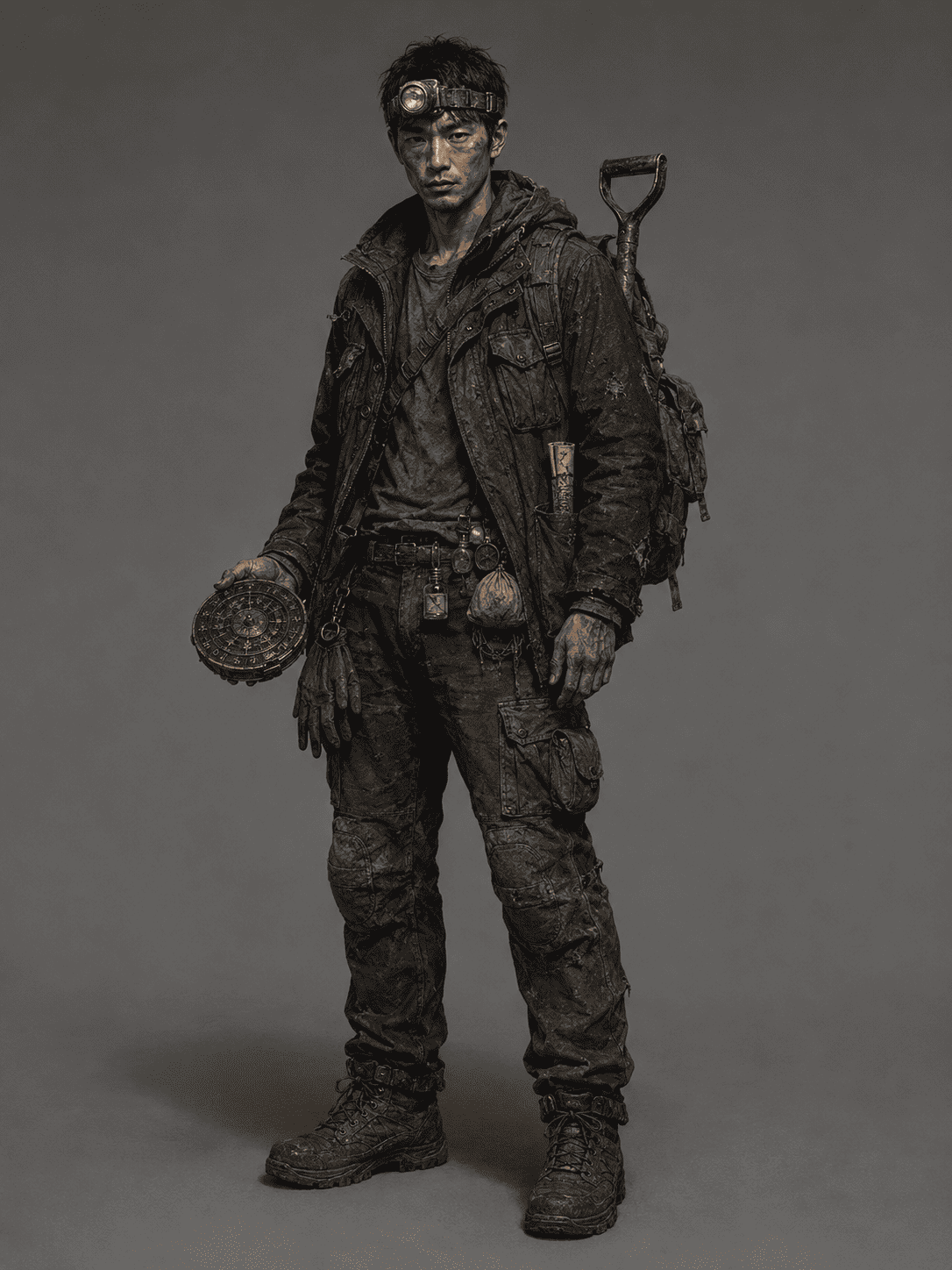
分金世家Heir of a fallen fenjin tomb-seeking lineage. He trusts only terrain, airflows, rock strata, magnetic declination, and the engineering logic of tombs—not gods. Until, to clear a debt, he takes a job he shouldn't and walks into a nameless imperial tomb.
 盜墓圈
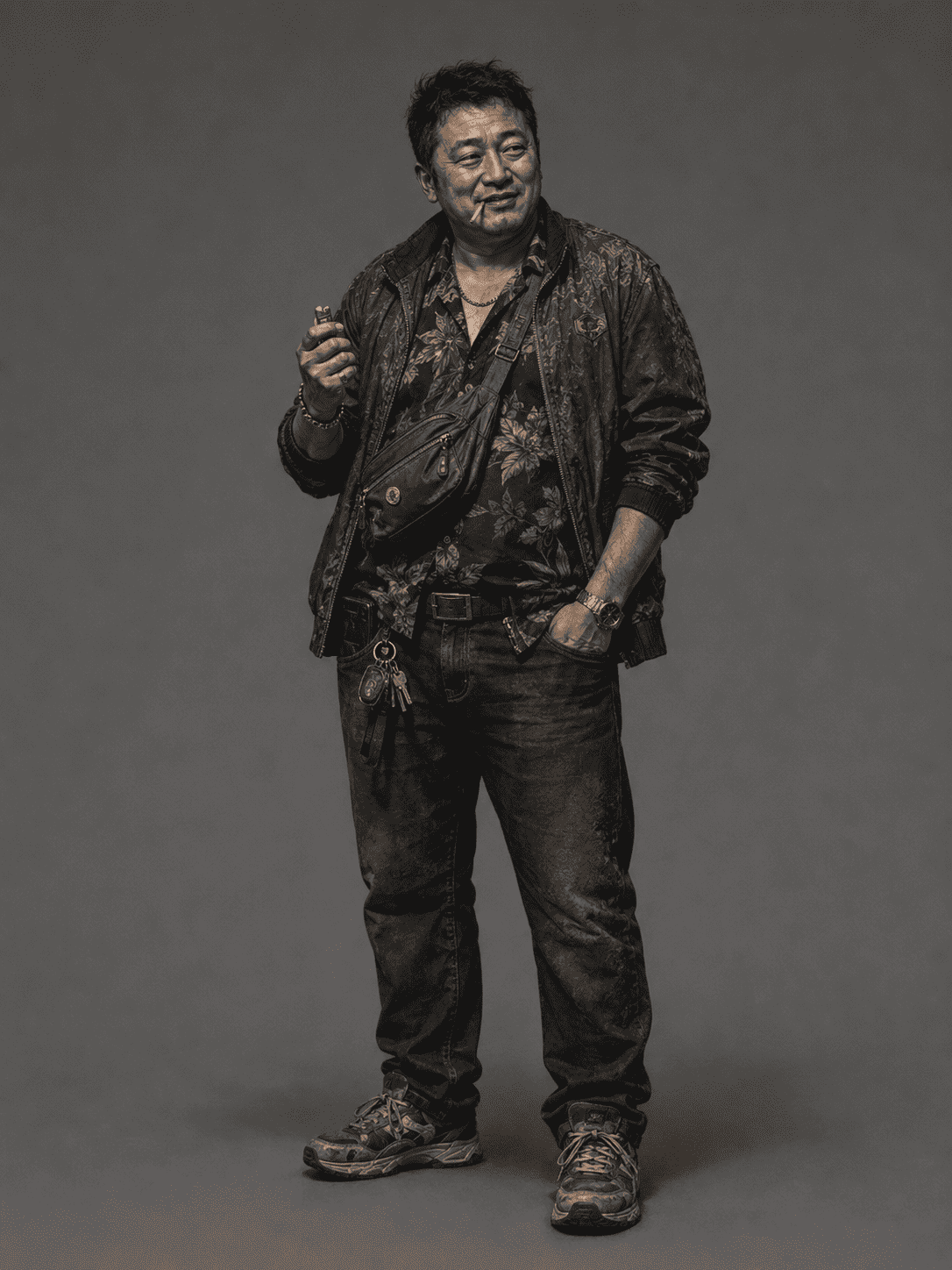
盜墓圈An old hand who has worked the tomb-raiding circle most of his life, Shen Zhaoye's partner. Black markets, smuggling routes, local powers—he knows them cold; cowardly, slippery, foul-mouthed, but his judgment in a pinch is sharper than anyone's.
About This Work
Tombrift is a globe-spanning tomb-raiding mystery saga told in serial form. Protagonist Shen Zhaoye is the last scion of a fallen geomancer lineage, hired to investigate lost royal tombs across the world — from the emperor mounds of the Qinling mountains and the pharaoh crypts of Egypt to the pyramids of the Maya and a buried city beneath Antarctic ice. Each tomb peels back another layer of a single secret: beneath every great empire, the same scaled bloodline was waiting.
What Shen Zhaoye inherited from his family was a nearly extinct craft and a debt he cannot clear. How much of the Fenjin art still survives in his hands, even he is not certain. What is certain is that as long as someone is paying, he goes down. On his first commission he assumes this is simply one more tomb job — until he finds a set of carvings on a burial-chamber wall identical to the ones on the fragmentary scroll his grandfather left behind, and that scroll records a tomb on another continent, from another civilization entirely.
The tomb work is written with real weight. The air inside the shaft, the timber shoring, the depth of standing water, the way a mechanism runs on load and time, the argument between partners over who goes down first — all of it faced head-on. Nobody escapes on protagonist privilege; every extraction costs something specific. A piece of equipment left behind. A favor owed. Something that could have been carried out, abandoned down there instead. Readers descending with them learn exactly where the fear comes from, and exactly when greed starts to outweigh it.
On worldbuilding, the story deliberately sidesteps the flat "lizard-people rule the world" conspiracy. China's dragon-vein lore, Egypt's serpent crown, the Maya's feathered serpent, India's Naga, Europe's dragon-blood kingship — these cross-cultural legends are reinterpreted as different afterimages of one event: a bargain struck between an ancient subterranean civilization and human kingship. What the emperors received was not a divine mandate but a contract, and the tombs were built not to inter the dead but to hold the terms of that contract in storage.
Structurally, the early arcs stay with Fenjin point-siting and single-tomb expeditions, each tomb a self-contained case. The middle introduces symbols that repeat across tombs and rivals who keep reappearing, widening the frame to a global network of royal tomb nodes. The later arcs drive toward the source beneath the Ice Mausoleum of All Kings in Antarctica. The mystery gains its pull from a direction that gets colder the further you follow it: no imperial tomb is a destination — every one of them is a door, and they all open onto the same underground city.
Relationships form the other spine of the work. What the client wants and what Shen Zhaoye needs to know are never the same thing. Each partner on a descent carries their own history and their own calculations. Rivals are not necessarily villains; often they simply learned part of the truth earlier. The question of who can be trusted gets rewritten again and again — usually inside a burial chamber, after the way out has already been sealed.
You can simply read the main episodes in order. The site also carries a universe codex (worldview, tomb records, factions, glossary), character files, and observation reports, unlocking progressively with your reading position so nothing gets spoiled early. The work is published in Traditional Chinese, Simplified Chinese, English, Japanese, and Korean. All characters, organizations, tombs, and historical reinterpretations herein are works of fiction, and bear no relation to any real person, group, religion, or event.
「No imperial tomb is a destination. Every one of them is a door — and they all open onto the same underground throne.」
Observer Reports / Author Announcements
Tomb node progression, worldbuilding expansions, and update announcements
Word on the Street | An Old Mojin Hand Says Three Vaults Must Never Be Sited — the Third Is Worst When You Get It Right
A passage that circulates in the trade, said to come from an old Mojin hand long retired. "There are three vaults you must never site. Get the first two wrong and someone dies. Get the third one right, and a living man turns into something else."
Strange Account|A Feng-Shui Manuscript Torn to Half a Page, the Second Half Missing
A feng-shui manuscript torn down to half a page. The first half records the verses for tracing the dragon and pinpointing the spot, then breaks off at the most crucial point—the second half, nowhere to be found.
Addendum | Are Imperial Tombs Really Just for Burying Emperors?
Are imperial tombs really just for burying emperors? Lay the imperial tombs of several civilizations side by side and an odd thing surfaces: in far too many of the greatest of them, the main chamber holds no body at all.