Qiu Che
Protagonist

Qiu Che

New Capital · High Schooler

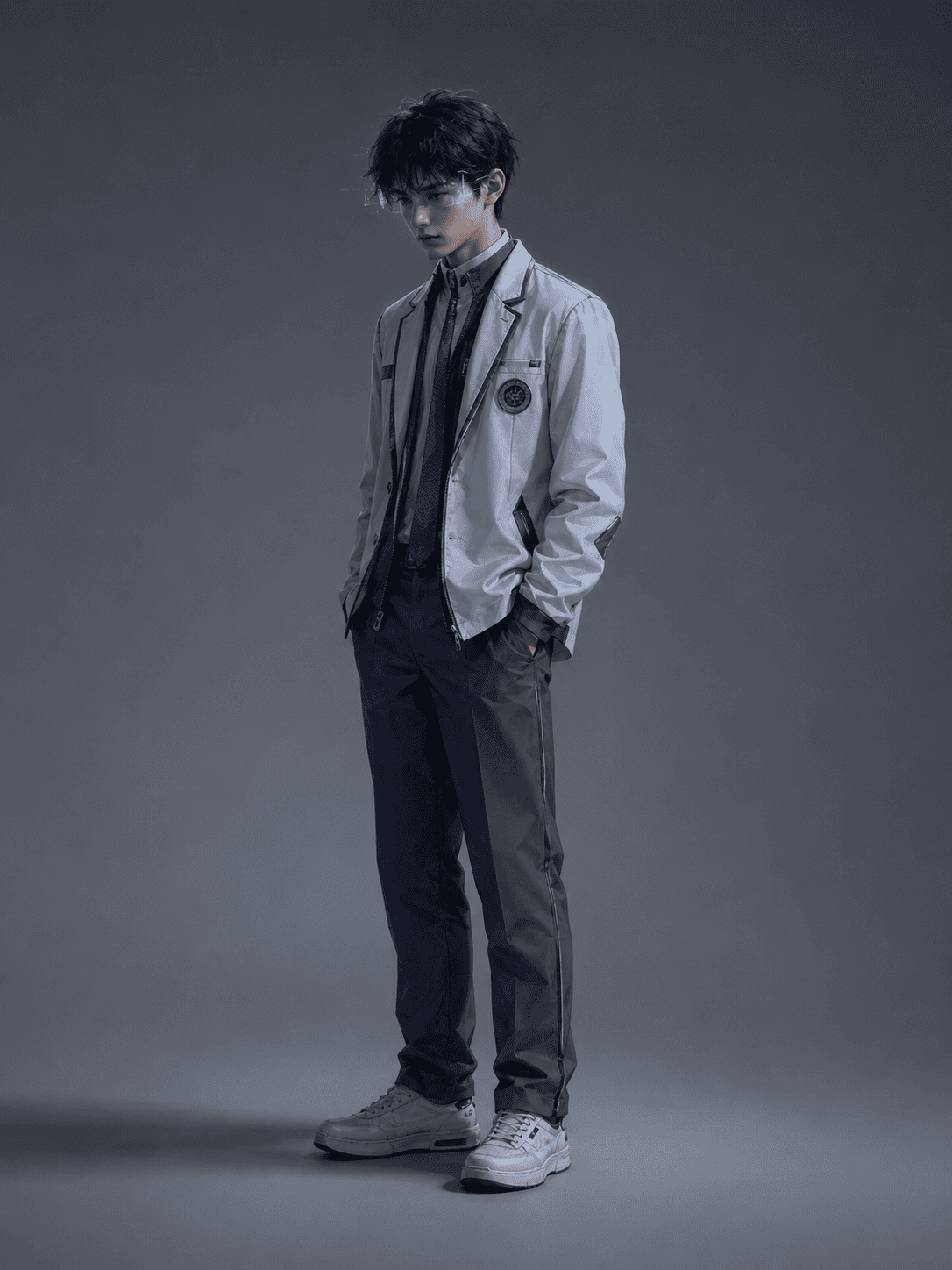
A seventeen-year-old high schooler in the AI-governed new capital. He alone can see what the whole city cannot—and that very sight is turning him into 'data contamination' in the system's eyes.

Faction
新都城 · 高中生
Related characters
0 people
Faction members
0
Related entries
0 entries

Character profile

Background / motivation / observation stance

Qiu Che

In the New Capital under Skyvault's governance, a seventeen-year-old high schooler living on the Seventh Ring Road. Above-average grades, quiet, guarded. Like everyone else he wears a student Skylex—yet he is unlike everyone else: the things no one in this city can see, he can.

Rational, calculating, hating to be arranged for; the first thing he learned is that when you see things no one else can, you'd best keep quiet.

The Unseen Fall

One afternoon, on the platform, he watched the surveillance feed of the building across the way and saw a person fall from a high floor—halfway down, he blinked, and the person was gone. No alarm, no crowd, no ambulance; the feed played on as if nothing had happened.

He pulled up the raw record, and in those few seconds there was nothing at all. Yet he knew—he had seen it.

I'm Not Alone

Late that night, a window in the building across the way flashed a signal at him with its lights: Don't worry, you're not alone. He flashed back 3 short bursts, the other side returned 3, and then left the light burning steadily.

A little over three minutes later, that entire floor was synchronized away by Skyvault. The light that had been burning went dark, and never came on again. But one thing stayed with him: he wasn't the only one who could see.

The Same Type

He began to notice a certain kind of person. Different ages, different identities, yet their posture was identical: eyes empty, mouths slightly upturned, standardized as if they'd been taught.

They always appeared at the on-the-hour positions Skyvault pushed out, and on the ground at every such position was a closed-ring marker. And every time he turned to look again, that person was gone.

The Photo Album

He dug out the old photo album and confirmed something he'd never been able to put into words: from ages three to ten, his father appeared often in the album—metal-framed glasses, thin. After his tenth birthday, there was no more father in the photos.

When he asked his mother, the answer was always the same string of well-rehearsed lines: a business trip, a while, out of town, bad signal. Only in the first second of looking at the album did his mother show a flicker of genuine reaction, saying that the way he'd been lately looked a little like his father during the stretch of time before he disappeared.

Category Three

The system stuck a label on him: Category-Three Data Contaminant. From that moment on, how to handle him no longer required his consent. His perceptual deviation had crossed the upper limit, and the tone Skyvault pushed at him shifted from 'Please cooperate' to 'No rescheduling accepted.'

Someone wanted him to install a Calibration module, and he refused to their face—because he was beginning to suspect that the thing it meant to calibrate away was precisely the part of him that made him who he was.

How He Hides It

The first thing he learned: when you see what others cannot, your first response must not be a response.

So he drills his face. Seeing something that should not be there, he shifts his gaze half a step sideways, holds two seconds, then brings it back; at that amplitude a Skylex attention sensor does not trip. The hands stay where they were. The breathing does not break.

He drills his questions too. To confirm something, he never asks it outright—he asks three unrelated things and buries the one in the middle.

He was taught none of this. In the New Capital there is nobody who could teach it.

Written on Paper

He uses paper. Not nostalgia—paper does not upload.

The notebook lives in a false bottom in the second drawer of his desk. He writes without the light on, by the glare off the inner ring through the window. What goes down is plain: date, time, place, what he saw. No reflections, no guesses.

He has developed a set of marks of his own. One symbol for the same-type people, another for the closed-ring sign, a dot beside anything uncertain. Read straight through, the book looks like a string of noise. He is the only one who can read it.

When he finishes he checks that the page edges line up. If he ever comes back and finds them out of true, he will know somebody has been through it.

0 observers liked this

Observer comments

Discussion about this character

Observer comments

0 records

No comments yet. Be the first observer.

Latest chapters