
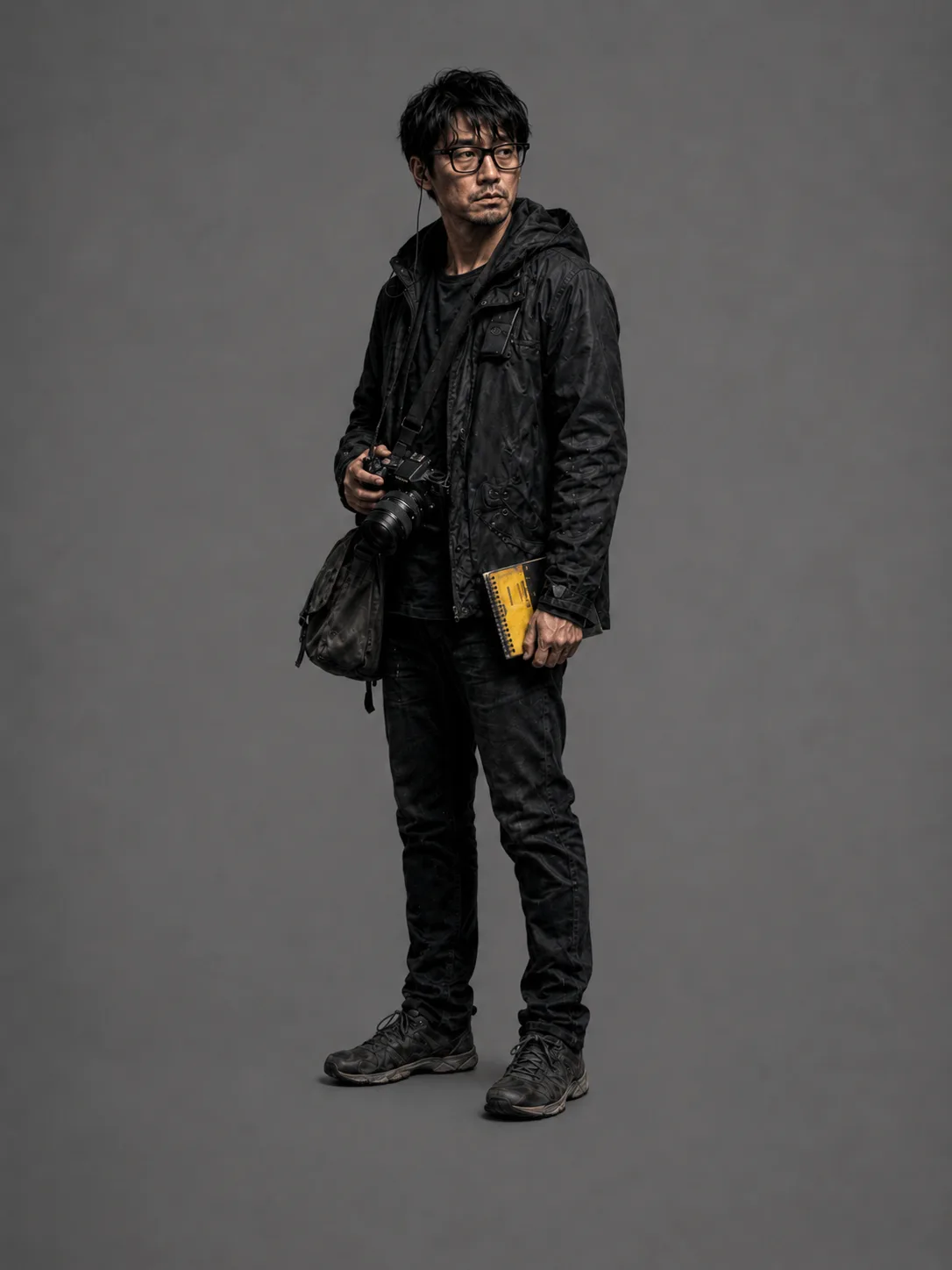
Li Kaichen
Protagonist

Li Kaichen

Investigative Reporter

A twenty-nine-year-old investigative reporter working freelance. A missing-persons case brings him to Taipei at 03:17—and from that moment, he starts to see that some things in this city have been quietly altered.

Faction
調查記者
Related characters
0 people
Faction members
0
Related entries
0 entries

Character profile

Background / motivation / observation stance

Li Kaichen

A 29-year-old investigative journalist, freelance, beholden to no party and trusting no authority. He works with a manual-focus old Sony α7, a waterproof notebook, and a secondhand voice recorder; he stores evidence only on an encrypted drive, never touching the cloud.

He is calm, calculating, good at hiding things, and presses on with an investigation even when afraid. What he cares about most is writing down what he sees—not letting it be erased.

03:17

A disappearance case led him to the streets in the small hours. At 03:17, the sky had split open in a seam, gone again within minutes—few were awake to see it, and the convenience-store clerk who looked that way for 2 seconds later insisted he'd seen nothing at all.

He wrote that night into his notebook: the time, the place, the look in that clerk's eyes. That was the starting point of his chase.

The Wrong Sign-Text

He combed through 5 districts looking for witnesses, only to discover something even more wrong: one by one, the people who had seen the anomaly before dawn changed their stories, deleted their own posts, dropped out of contact—until in the end even their accounts vanished. In the whole affair, the only person who remembered everything intact from start to finish was himself.

A sign flickered before his eyes, and the familiar characters turned into a kind of square-block script he didn't recognize, yet could somehow vaguely read.

The Alley in the Surveillance Footage

He learned to fill his own blind spots with other people's eyes—borrowing surveillance footage from a breakfast shop, a motorcycle garage, a drinks stand. Three cameras of different makes and angles, all within the same span from 03:15:40 to 03:18:20 before dawn, captured the same middle section of a brick wall, where a hole that shouldn't exist had appeared.

Everyone on that street said the wall had stood there for a good twenty years, and there had never once been an alley.

Xingyun Station

The clues began to point to one place: Xingyun Station—a station name that doesn't exist anywhere in the Taipei Metro system. People riding before dawn glimpsed it flash by on the station-name screen; in someone's phone photo album, an extra screenshot appeared, capturing that square-block station name, only to delete itself 17 minutes after being posted online.

He saved these screenshots, one by one, onto an encrypted hard drive.

Platform Two

He timed it for that stretch before dawn, walked to the end of a passage that shouldn't exist, and stepped onto a platform that shouldn't exist. Across the platform stood a row of old dark-red diesel cars, and the nearest carriage was packed with people—their faces, their postures, their clothes all exactly matching the missing persons he had investigated.

Their eyes turned toward the spot where he stood, as if there were no one there at all.

His Kit

The camera is an old manual-focus Sony α7 with a single lens. Manual focus is slow, but it does not hunt back and forth in the dark, and it fires when it needs to fire.

The voice recorder is secondhand and came without any networking, which is why he chose it. The notebook is waterproof and he writes in ballpoint, not pencil—pencil smears.

Evidence goes onto encrypted drives and never to the cloud. There are two drives holding the same contents, one on him and one somewhere he rarely goes.

The whole setup looks a decade behind. His own account of it: being behind has one advantage, which is that nobody else gets to decide which of his files are synced and which are deleted.

Getting It Down

In his years doing investigative work he has watched too much get erased. Stories pulled, accounts suspended, sources changing their story, and at the end what remains is the copy in his own hands.

So he writes it down. Times to the minute, locations to the street number, and for anyone speaking, the expression and the pauses. Most of the detail is never used. The once it is used, it is everything.

He does not much trust his own memory—memory rewrites itself against whatever you learn later. The notebook does not.

He is afraid, at times. When something feels wrong mid-investigation his palms sweat, he takes a different route home, he moves the drive somewhere else. Then he goes out again the next day.

0 observers liked this

Observer comments

Discussion about this character

Observer comments

0 records

No comments yet. Be the first observer.

Latest chapters