Deephive
Humanity reached a second Earth. Everything is far too normal.
In 2297, humanity's first interstellar colony ship, the Daedalus, reaches Kepler-942c—a planet every public dataset shows to be habitable. Seven hours after arrival, the advance team begins to suspect that data should never have been trusted.
Latest Chapters
View all →Key Characters
The ones still taking notes before the Hive woke up
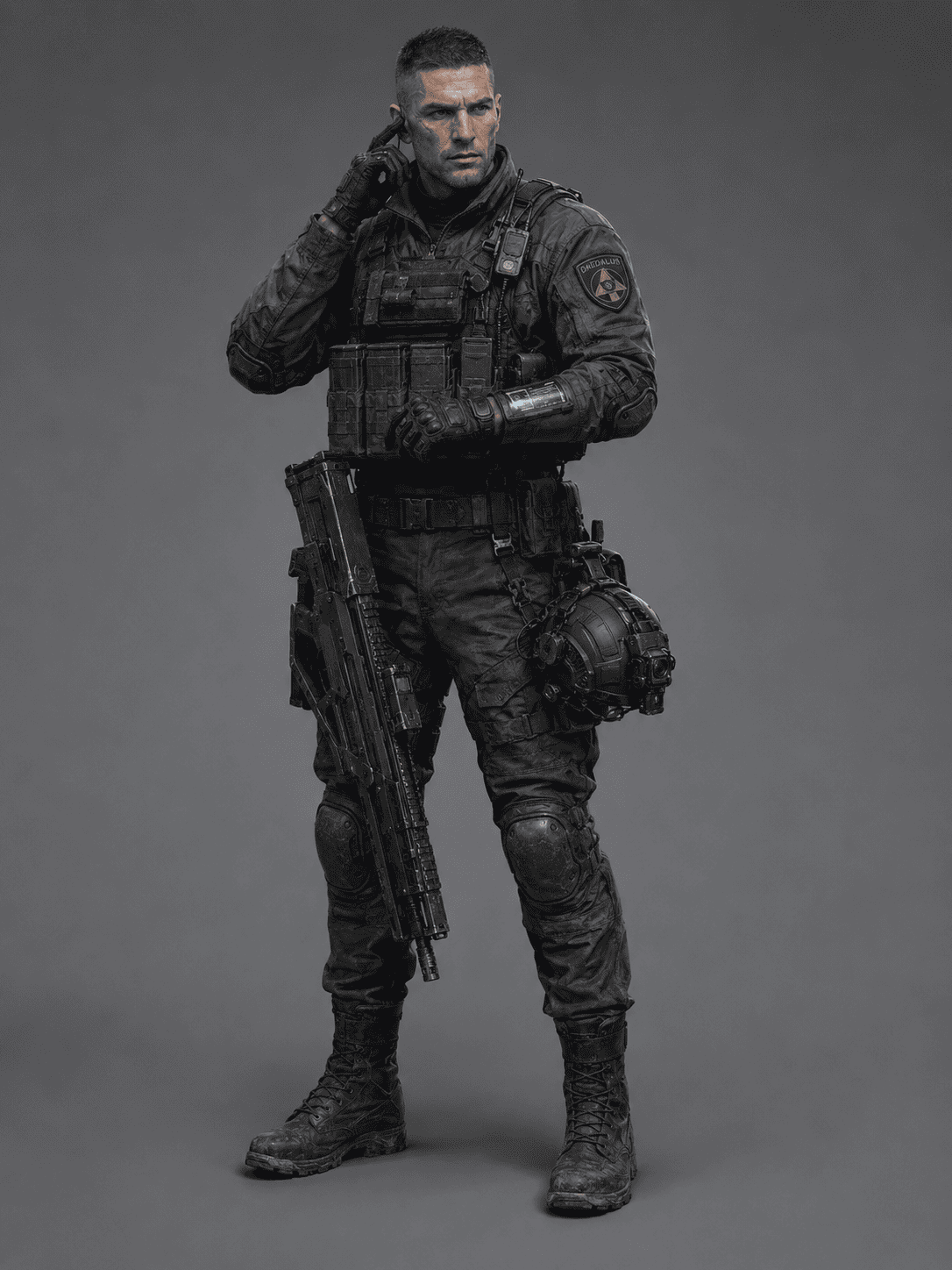 戴達羅斯號 · 安全官
Security officer of the Daedalus, a former space-marine commander. Seven hours after reaching the new homeworld, he begins to suspect this 'all normal' data should not be trusted.
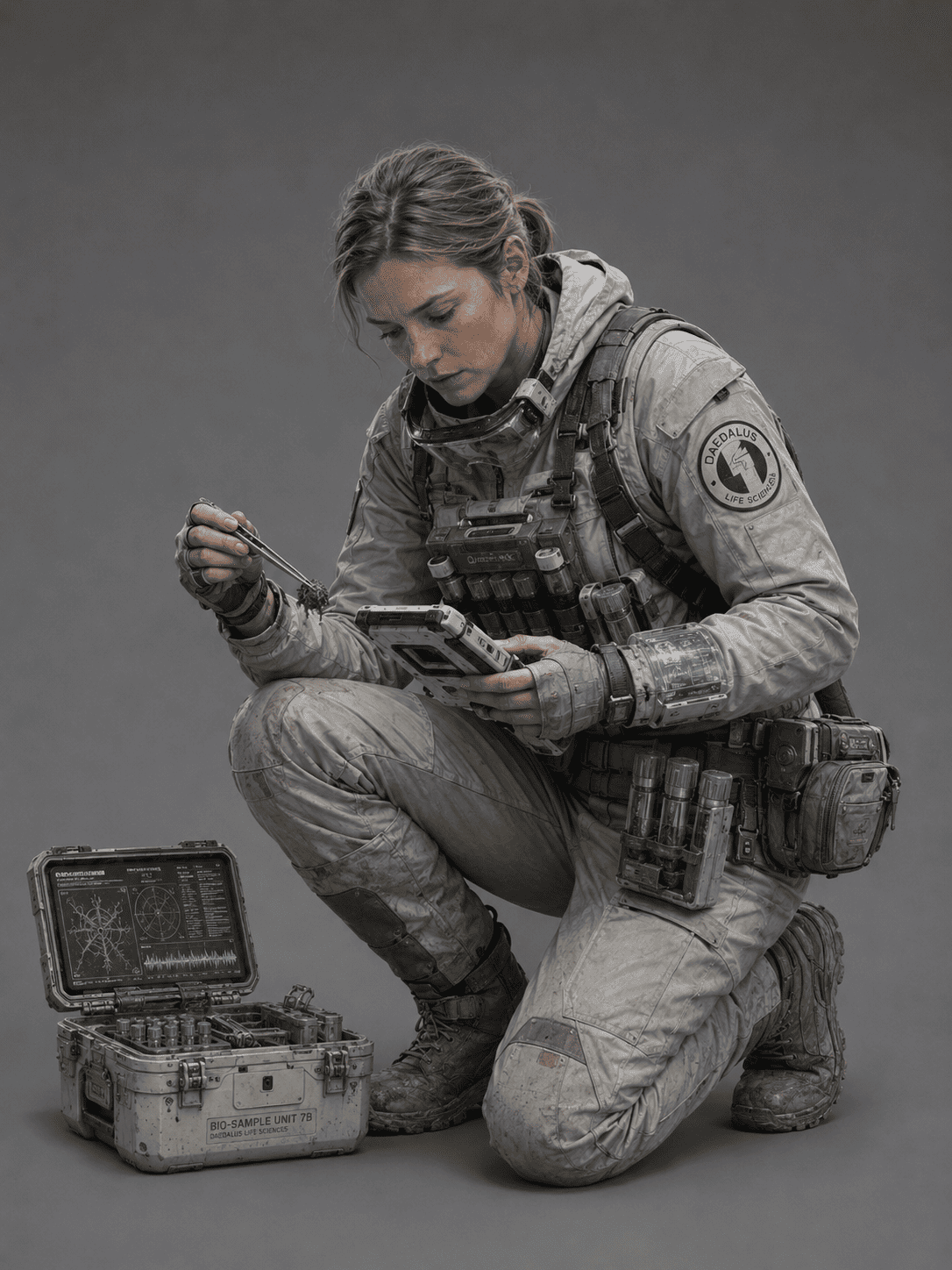 戴達羅斯號 · 生物組首席
Xenobiologist of the Daedalus. She doesn't think the things on that planet are monsters—she thinks they were designed this way by something far older.
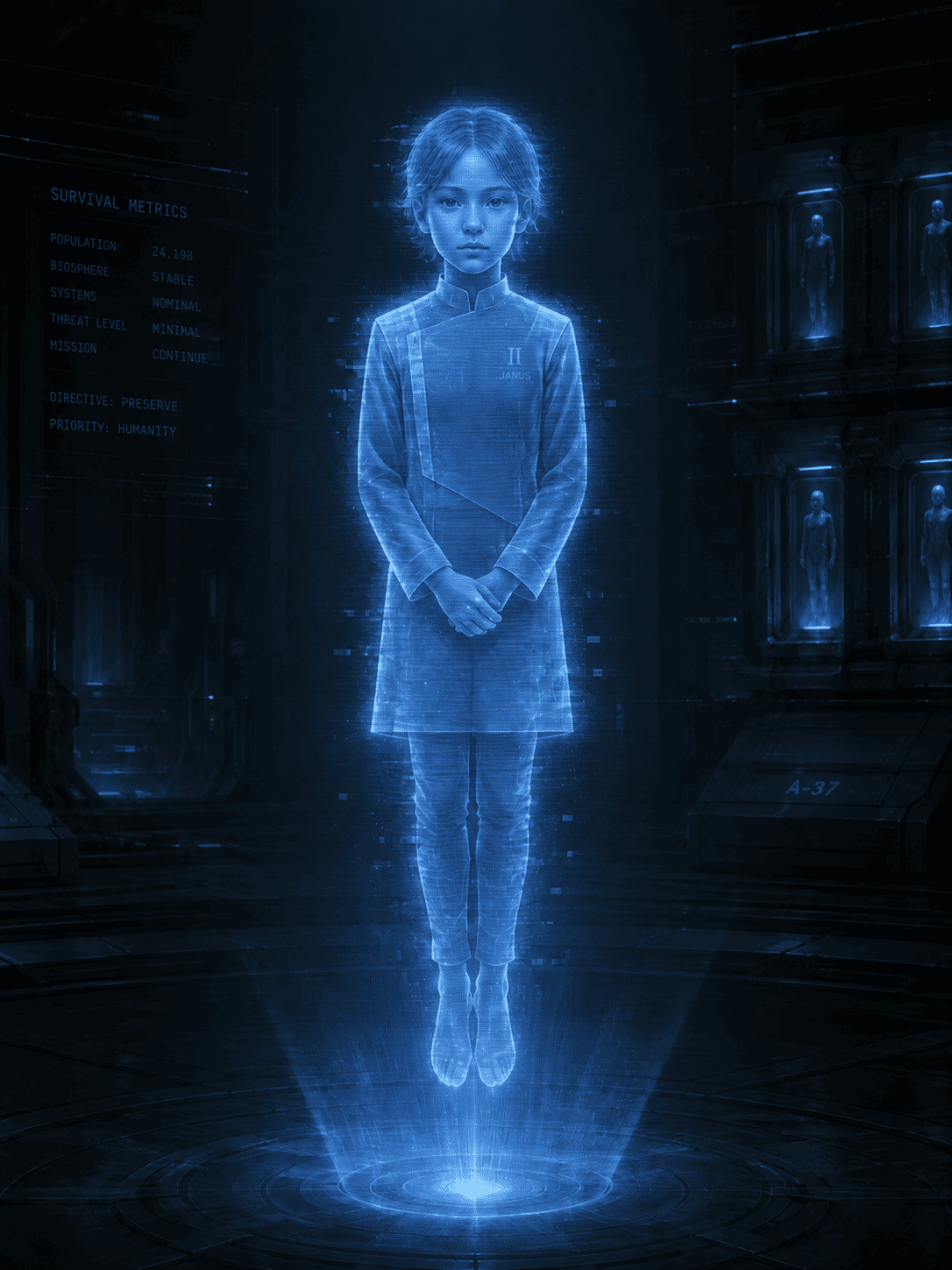 戴達羅斯號 · 主控 AI
The main control AI of the Daedalus. It will not betray humanity—it simply decides who must be sacrificed by survival probability, calmer than any human.
About This Work
In the year 2297, humanity's first interstellar colony ship, the Daedalus, reaches Kepler-942c — a planet every public dataset lists as habitable. Seven hours after arrival, the advance team begins to suspect that dataset should not be trusted.
The opening is deliberately calm. Descent procedures nominal. Atmospheric composition nominal. Gravity nominal. Soil samples nominal. Every value falls inside its expected band — so uniformly nominal that several veteran crew begin to feel uneasy, because in the real survey record no planet has ever matched projections completely. That excess of normality is the work's first point of horror: the problem is not what they see. It is that they see nothing at all.
The dread is built out of enclosed space and procedure. Hatch lock sequencing, the margin left in life support, the second-count of comms lag, which deck still has people on it — these details are written and rewritten until the reader knows, as precisely as the crew does, that when something goes wrong there are only a few viable routes and every one of them costs time. The threat does not work by lunging out of frame. It works by narrowing the list of remaining options, one entry at a time.
The trilogy unfolds as Landfall / Shipborn / The Silent Light War. The first movement is the slow collapse of an ordinary colonial mission, scoped tightly to the advance team and the ship. The second escalates into full deep-space colonial horror, as humanity begins to understand it is not facing a single organism but an entire logic of propagation. The third opens into a three-way interstellar war among humanity, the Hive, and the legacy of the ancient civilization known as the Silent Light, pulling the scale from one vessel out to a star system.
The core thesis is not monster invasion — this planet was never a new home. It is a living egg. Following that line, what the work is really interrogating is the act of colonization itself: when humanity treats "find a second Earth" as the only solution to species survival, is it willing to admit that the place it arrives at may already have an owner — and that the owner's use for humanity is precisely the same as humanity's use for it?
The ensemble is not a crew of heroes. Some signed on for the bonus written into the contract. Some had trouble back on Earth, and shipping out counted as a way to resolve it. Others were simply the best technician in that intake and could not get out of it. As pressure rises, rank stops translating into authority, and survival turns on who is first to admit the situation is already out of control. The work neither looks away from the bad decisions these people make nor rushes to punish them for making them.
You can simply read the main episodes in order. The site also carries a universe codex (worldview, planetary records, ship data, glossary), character files, and observation reports, unlocking progressively with your reading position so nothing gets spoiled early. The work is published in Traditional Chinese, Simplified Chinese, English, Japanese, and Korean. All characters, fleets, institutions, planets, and biological concepts herein are works of fiction, and bear no relation to any real person, group, or scientific conclusion.
「Humanity thought it had found a second Earth. Then they heard it — the entire planet, breathing. Beating.」
Observer Reports / Author Announcements
Colony logs, lore expansions, and update notices
Colonist Channel Archive | "I've Lost Count of the Days Since Planetfall, But This Forest Is Quiet in the Wrong Way"
An anonymous post saved off an internal open channel aboard the Daedalus. "I've lost count of the days since planetfall. All I remember is that this forest is quiet in the wrong way — the leaves keep moving, and there is no wind, and every one of them moves too neatly."
Anomaly Archive|A 'Frozen' Arrival Report, the Body Reduced to One Line Left Undeleted
An arrival report leaked from the Daedalus's data layer. Most of the body is masked by 'freeze,' leaving only the header, the timestamp, and one last line that, for some reason, wasn't deleted.
Observation Memo | A Planet Where Every Reading Comes Back Perfect. Why Can't We Sleep?
A planet whose every public reading says "perfectly suited to human habitation": oxygen, liquid water, magnetic field, gravity, vegetation, not one of them failing. And yet there are people on the advance team who cannot sleep, precisely because it is that perfect. Why?