
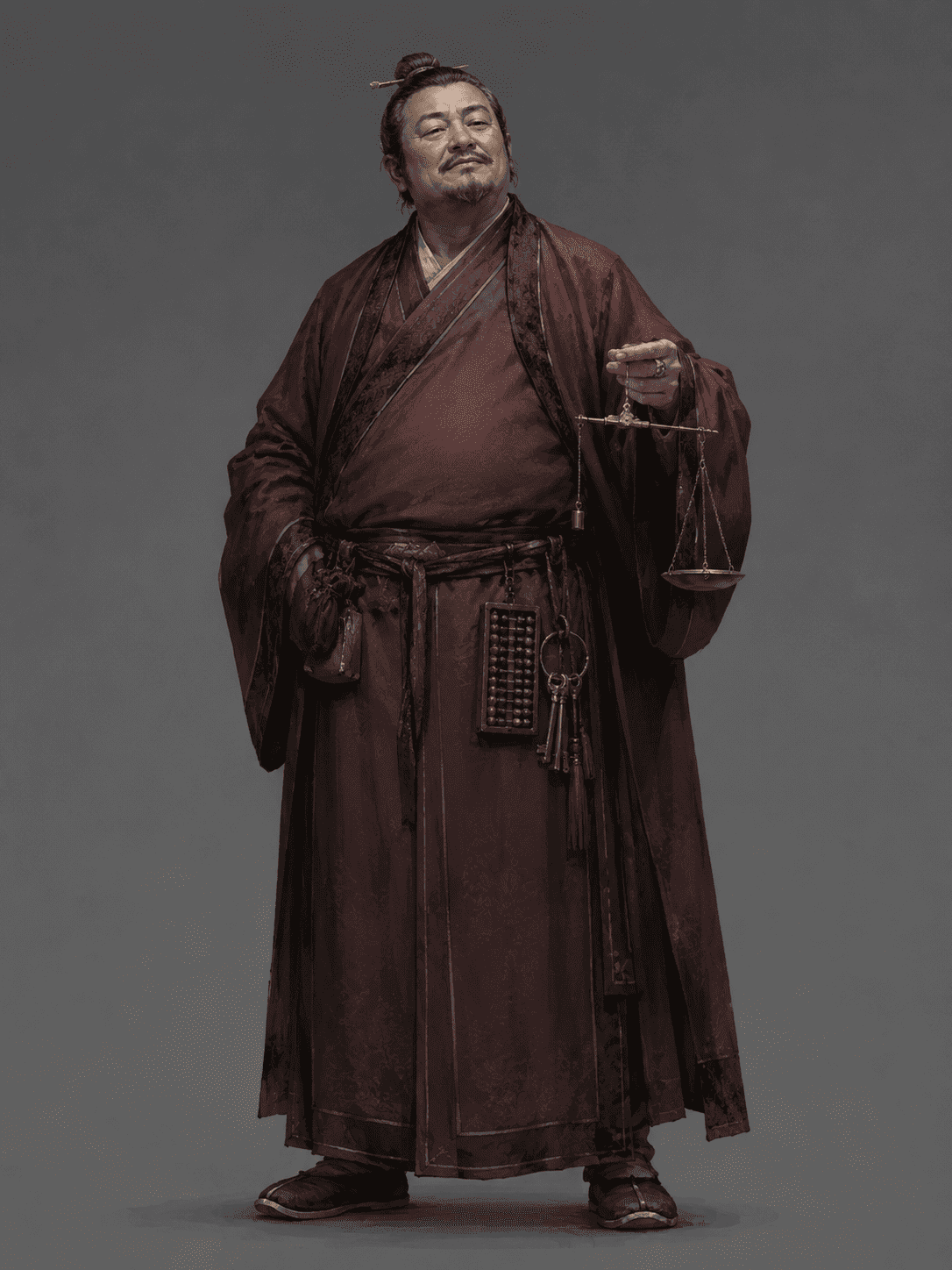
Shopkeeper Zhou
Main character

Shopkeeper Zhou

Qingqi Bazaar · Master of Baicao Pharmacy

The master of the Baicao pharmacy in Qingqi Bazaar, Lin Que's employer. Shrewd, far from foolish—a face of how the bazaar's underbelly squeezes its resources.

Faction
青岐坊市 · 百草丹鋪
Related characters
0 people
Faction members
0
Related entries
0 entries

Character profile

Background / motivation / observation stance

Shopkeeper Zhou

The proprietor of the Baicao Pharmacy in the Qingqi Bazaar, clad in a deep-crimson robe. He is Lin Que's employer, and also the first kind of person Lin Que learned to handle in the bazaar: shrewd, but not stupid; sparing with words, exact with the accounts.

He isn't cruel enough to stir up trouble, yet he wrings out every last bit of profit he can—he is, on the bottom-rung Rogue Cultivators, a quiet, unruffled face of the machine that is the bazaar.

House Rules

The shop is not large: three bays at the front, seven spent-elixir vats in the back yard, one old counter in the front hall. Most of the time he sits behind that counter working the abacus, not looking up much.

The house rules are his, and he is the only one who remembers all of them: which vat gets cleaned when, which herbs are never bought from whose supplier, which hours he takes no work, that no outsider enters the back yard in the three days before the month-end reckoning. There are many rules, and he never states one twice; if you missed it, that is your problem.

Wages are at market rate—no more, no less. When something goes wrong he does not push anyone forward to take the blame, and he does not shoulder it for them either. That is exactly what Rogue Cultivators are here for: hard, but predictable.

He generally puts one thing in a sentence. On the day he adds half a sentence more, that half is usually the point.

Don't Clean the Third Vat

That morning, he piled yet another large stone atop the third spent-elixir vat, then sent Lin Que to West Street to deliver two empty vats to Gui's place. When Lin Que came back and handed over the receipt, he didn't look up; he only dropped a remark that hardly sounded like a question: West Street's lively.

What he knew was always more than what he said.

The Abacus Behind the Counter

The abacus came down from his father. The frame split once and is held with a strip of brass. He will not replace it; his reason is that on an old abacus he knows where every bead slides without looking.

Pill shops in the bazaar mostly keep two sets of books, one for showing and one for keeping. Both of his are written out neatly—neat enough that an inspector finds nothing to catch. What is wrong is not in the characters; it is in which entries went into which book.

He does not speak while working the abacus. The hands know to hold their reports until the beads stop.

Twice a day he looks up: before opening, at the flow of people at the street mouth; after closing, at the spent-pill vats. Each time he notes something down, in a third book nobody sees.

The Kind of Hand He Wants

The work at the pill shop is not hard to learn. What is hard is staying. Cleaning and sorting the vats is the filthiest of it, and the rogue cultivators willing to do it mostly leave within a few months—too little money, too much grind.

He has his own way of choosing. Not the root, not the lineage. He asks first where a man lives and who is left at home. After that he knows what he needs to: a man with nowhere to fall back to works steadily.

The wages he pays are not high, and he has never once paid late. Late wages give people other ideas; that is a sum he has worked out.

He does not praise a hand who does well, and rarely scolds one who errs. He simply goes over the matter again, in more detail than the last time. Those who understand do not repeat it. Those who do not are gone before the month is out.

0 observers liked this

Observer comments

Discussion about this character

Observer comments

0 records

No comments yet. Be the first observer.

Latest chapters